
Greene County Arrest Reports
No sheriff page in Greene County offers a rolling three-day, seven-day, or weekly booking blotter. What the sheriff does provide is an inmate search built around current custody. It shows who is held today, with no stated archive depth. So it can identify someone still in the jail but not everyone who passed through in recent days. A real multi-day arrest search has to combine several things. City activity reports, a dated records request, later court filings, and clearly labeled secondary sources all play a part.
Beavercreek is the exception worth knowing. Its Police Activity page publishes official reports covering two-week stretches. Adult and juvenile arrests sit alongside calls, traffic stops, crashes, and other police work. All of it lands in one document. That makes the series useful for official trend context. It never promises a person-by-person county booking list or booking photos, though.
Read Greene’s Multi-Day Record
Begin with the event and the date range you actually care about. One matter can look like four different things. A police activity report, a jail booking, a court filing, and a news story may each describe a separate stage of the same case. So anchor your dates to the official record rather than a private page's publication date. For questions limited to the present moment, the Arrested Today page walks through the live-roster fallback. It also covers that fallback's timing limits.
- Check the sheriff roster for current Greene County custody.
- Open Beavercreek’s report covering the relevant two-week period if the event occurred there.
- Search CourtView or the correct municipal court for later filings.
- Use local news only for selected incidents, not as a complete blotter.
- Request dated booking records through Greene County when an official list is required.
- Compare any private archive entry against the agency or court record.
Work backward from authority, not from whatever looks newest. Fairborn and Xenia list no public daily arrest roster on their official pages. Their police records channels still handle incident reports. County custody questions go to the sheriff.
Beavercreek’s Two-Week Arrest Reports
Beavercreek's bi-weekly PDFs give Greene County its clearest official look at multi-day police activity. Each report sorts work into categories. It shows the volume of calls, officer-initiated stops, traffic activity, crashes, and adult or juvenile arrests across the covered period. Keep the scope in mind. The numbers describe Beavercreek Police Department activity. They do not cover every agency working in Beavercreek, and they do not cover all Greene County bookings. Someone cited rather than arrested, a juvenile, a transferred person, or a person booked elsewhere may never touch the county jail roster at all.
The official report library displays the full archive:
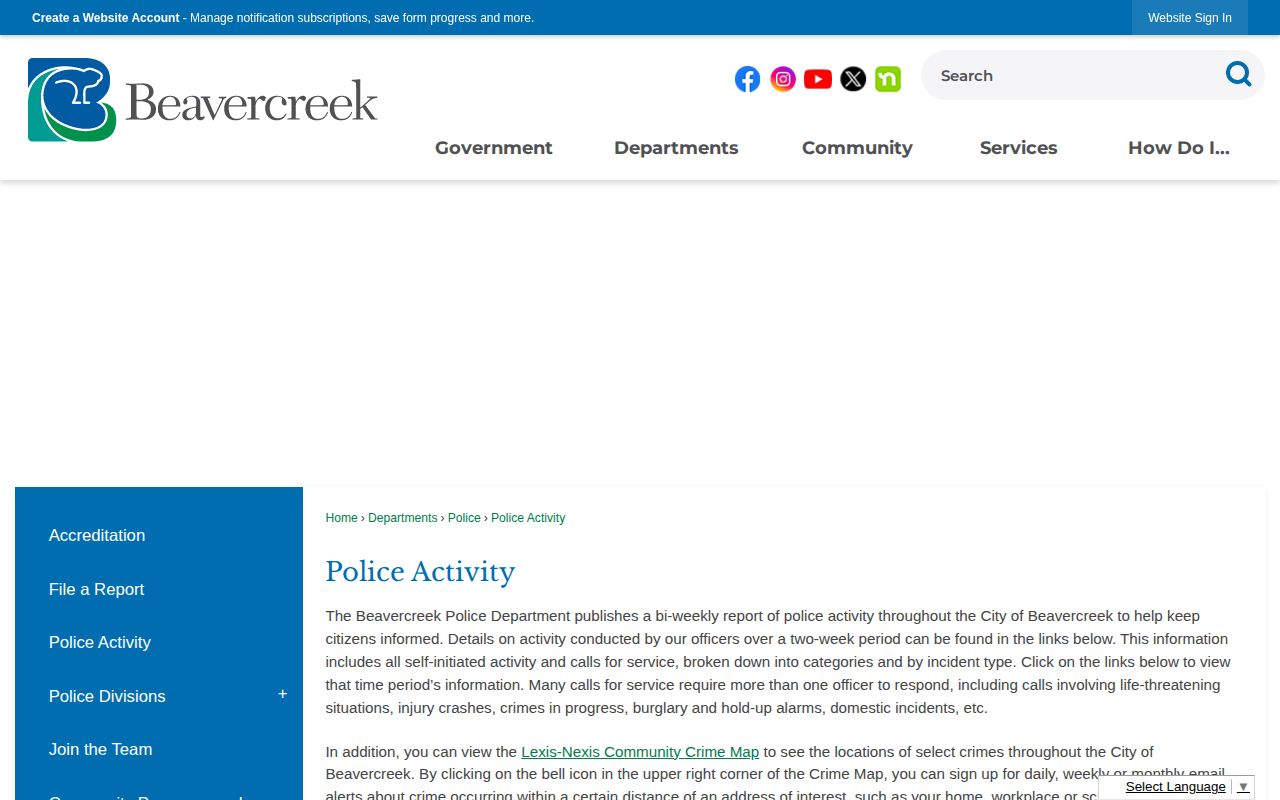
Think of it as an agency activity archive. It is not a booking-photo feed or a complete list of individuals.
Use the report period printed on the document itself. Do not go by the day you happened to open the page. Category counts confirm arrest activity in a window. But a person-specific answer still needs the incident report, the sheriff booking record, or the court case. One more limit: juvenile details can be restricted even when the category total is public.
What Greene Arrest Sources Show
Every channel carries its own fields. The sheriff roster tracks current custody. A police report may hold the full event narrative, while an aggregator copies biographical data from elsewhere. More fields does not mean more authority.
| Source | Typical information | Key limit |
|---|---|---|
| Sheriff roster | Name, image when available, charge access, VINELink link | No public multi-day filter or archive depth |
| Beavercreek reports | Two-week activity categories, including adult and juvenile arrests | Not a person-level county booking roster |
| Police incident report | Event details, agency identifiers, dates, and actions subject to redaction | Must be requested from the originating department |
| Court docket | Case number, filings, hearings, orders, and disposition | May appear after booking and may be in municipal court |
| Private archive | Copied dates, agency, charges, image, and descriptors | Unofficial, possibly stale, incomplete, or miscopied |
A booking date is not always the arrest date. A warrant pickup can open a new entry on an old case, and an arrest can happen hours before transport or processing ever starts. Charges as booked may also shift once a prosecutor files.
Private Greene Arrest Archives
Private arrest sites play by their own rules. RecentlyBooked tracks the last thirty days of Greene County bookings, flagged with an update indicator. BustedNewspaper digs deeper with booking times, arresting agencies, charges, and physical descriptors, while Arrests.org opens county, agency, and historical routes. Mugshots.zone labels recent entries by date.
None of the four is official. Update schedules are not sheriff promises. A booking photo or charge can linger after the custody record itself changes. Treat these archives as leads toward a possible date or agency, then verify through the sheriff, the police department, a records response, or the court.
The RecentlyBooked page shows the contrast plainly.
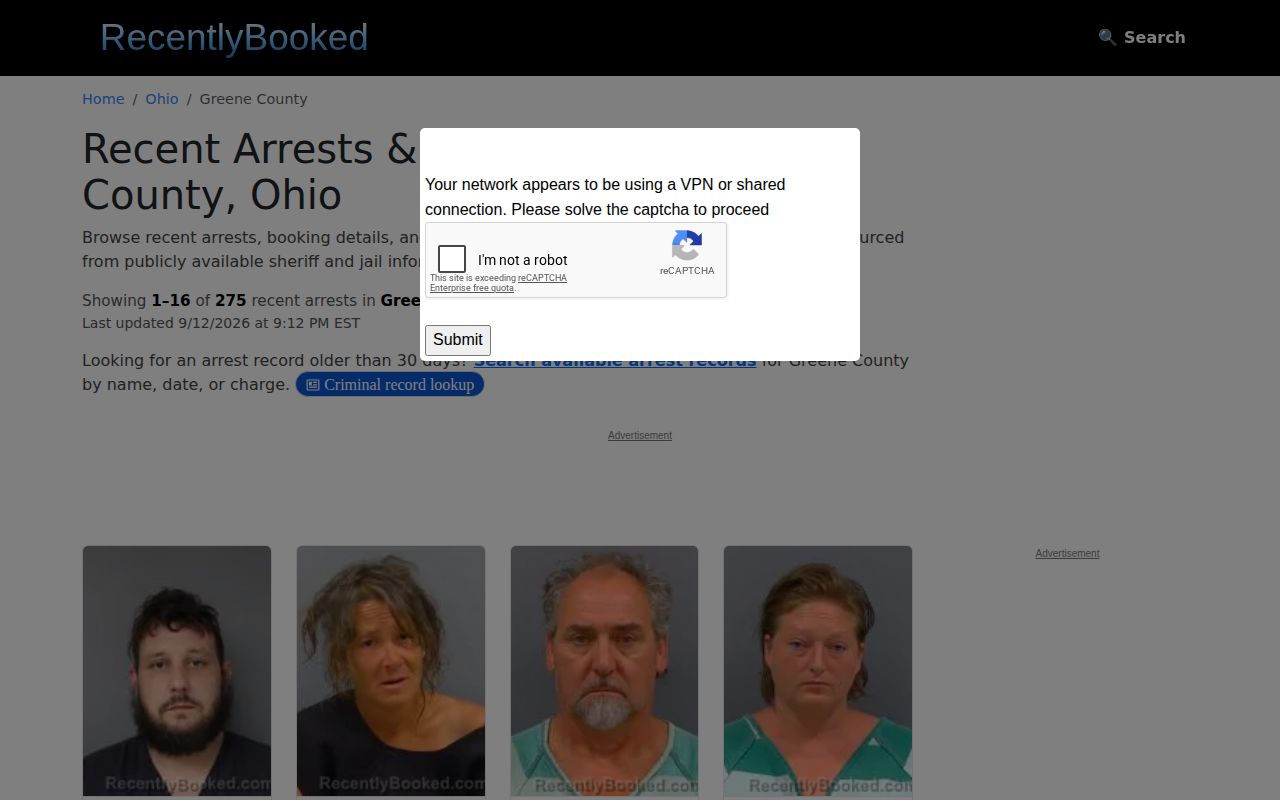
The layout works as a secondary lead. Every entry still needs confirmation against an official source.
Weekend Greene Arrest Gaps
No source shows a dependable weekend or holiday publishing pattern for Greene County arrests. A Friday arrest might hit the jail roster within minutes. It might surface only after processing. Or it might vanish after a short stay before anyone looks again. A city report may wait until its full two-week period is compiled. Private sites refresh on their own clocks, and local news picks only selected events.
Do not count visible names on a Monday. That total is not a weekend figure. When a documented count or list matters, request booking entries for the exact dates. Note the access time and source for anything you save. A current roster shifts. People are released or transferred.
Greene Arrest News Coverage
Local newsrooms give Greene County residents a quick way to follow arrests as they happen. WHIO's Greene County section tracks breaking cases across the county. Dayton Daily News covers the wider region too. Xenia Daily Herald and Fairborn Daily Herald bring a tighter, city-level view. The Greene County Prosecutor also posts press releases on selected cases once charges move forward. These cover steps like pleas and sentencing.
News coverage has real limits, though. Reporters chase events. Many arrests never get a story. The images that run may be staff or file photos rather than booking photographs. The court docket remains the place to check a case's final outcome.
Greene Booking Record Retention
Greene County Archives keeps county records through their full lifecycle. It is not a standing mugshot vault. Only records with lasting legal or historical value stay there. Just a small share qualify. Most are held ten years or longer. Holdings are sorted by record type, with no single index by person name.
For an older booking record, start with the sheriff or NextRequest. Give the full name, a rough date, the arresting agency, and the record you want. Archives makes sense only when the record's type and age fit a transfer. Its offsite form narrows staff research to one specific record. Fees and timing are explained separately. Ohio's sheriff schedule is just a model; Greene County's own approved retention schedule governs.
A name can drop off the live roster for simple reasons. Custody changes often explain it. The source booking record is not destroyed, sealed, or expunged by that alone. Court files can survive on their own schedule. That holds even after a jail card is gone.